5.4. Network backend
The sandbox always starts with --unshare-net and therefore with no network
at all. When the network capability is granted, connectivity is provided
by attaching slirp4netns to that private namespace — a user-mode network
stack, no root, no bridge, no host interface exposed.
The capability is granted by the session’s mode — confirmed per command in
ASK, granted in AUTO, never in SAFE — and --no-network takes it
out of every mode (Security model). This page covers sandboxed
commands only: the web pair runs in the chat process under its own boundary
(web_fetch.py), and an external capability provider is a host process
reached through the capability gateway, not through this backend.
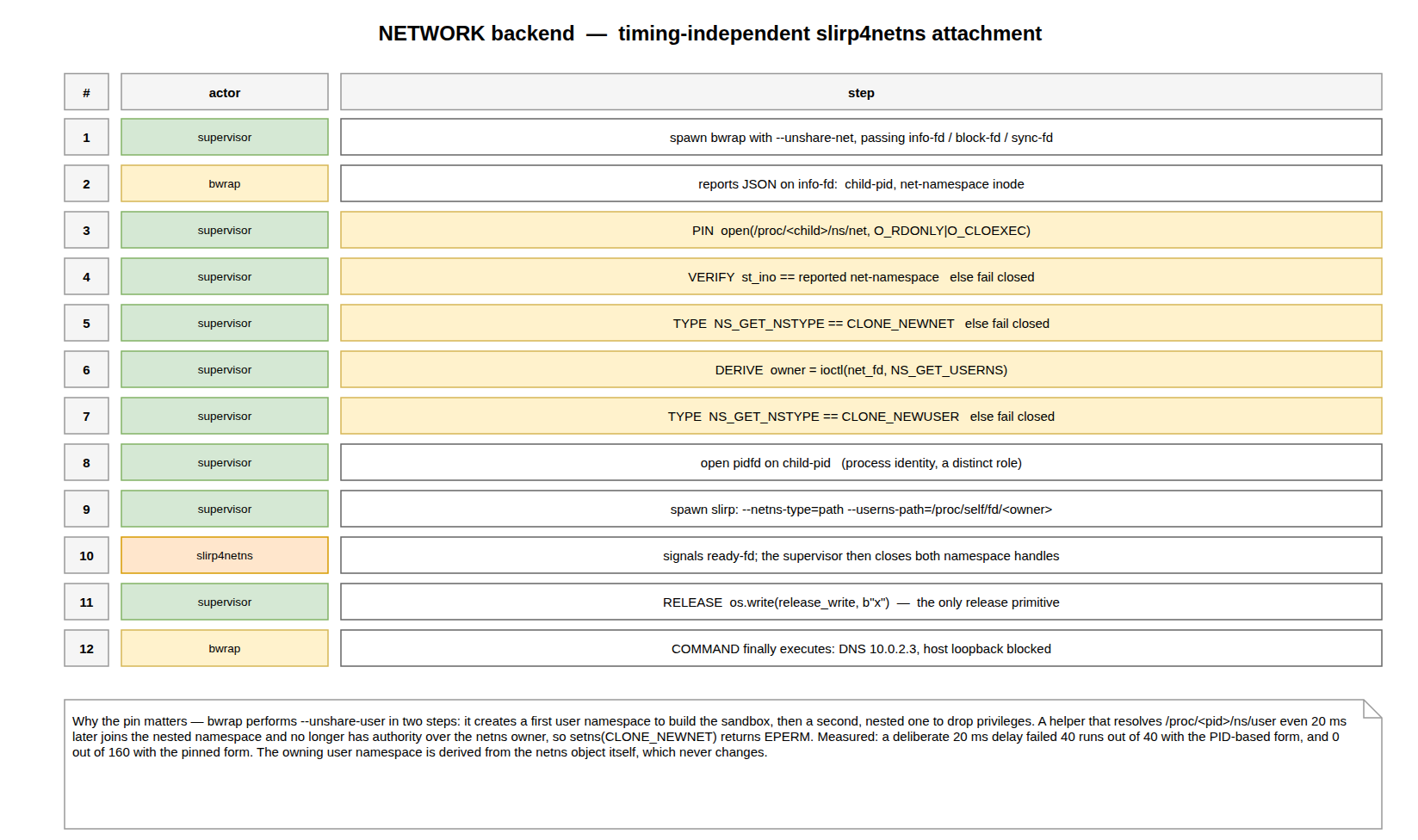
Fig. 5.4 The attachment sequence. The highlighted steps are what make it independent of timing.
5.4.1. The descriptor protocol
Four descriptors coordinate a sandbox that must not start until the network is ready.
Descriptor |
Flag |
Role |
|---|---|---|
|
|
bwrap writes namespace JSON here: |
|
|
The sandboxed command blocks reading this until released. |
|
|
bwrap holds its own copy of the writer. |
|
slirp |
The helper signals readiness; closing the exit descriptor asks it to terminate. |
5.4.1.1. The --sync-fd subtlety
--sync-fd is given the write end of the block pipe, and bwrap keeps that
copy open. This is what makes the release primitive unforgeable: if the
supervisor merely closed its own writer, the reader would not see EOF,
because bwrap still holds a writer.
The consequence is exactly the property we want:
os.write(release_write, b"x") # the ONLY thing that releases the command
Dropping the supervisor’s writer without writing does not release anything. There is a test for precisely that, comparing the behaviour with and without the release write.
5.4.2. The race this design removes
The obvious implementation — hand slirp4netns the child PID and let it
resolve /proc/<pid>/ns/net itself — works, and then stops working under
load, in a way that is very hard to attribute.
What strace shows the helper doing:
openat("/proc/<child>/ns/net", O_RDONLY) = 6
openat("/proc/<child>/ns/user", O_RDONLY) = 7
setns(7, CLONE_NEWUSER)  = 0
setns(6, CLONE_NEWNET)   = -1 EPERM (Operation not permitted)
It joins the child’s current user namespace, then the network namespace.
That is fine — for a few milliseconds. bwrap performs --unshare-user
in two steps: a first user namespace to build the sandbox, then a second,
nested one to drop privileges. Measured on the child:
t=0 ms    ns/user -> user:[4026532425]   ns/net -> net:[4026533044]
t=50 ms   ns/user -> user:[4026533847]   ns/net -> net:[4026533044]   (unchanged)
Once the child is in the inner user namespace, a helper that joins it no longer
has CAP_SYS_ADMIN over the user namespace that owns the network
namespace, and setns(CLONE_NEWNET) returns EPERM. The network
namespace itself never changed.
Measured, 40 iterations per arm:
Arm |
PID-based |
Pinned |
|---|---|---|
no injected delay |
40/40 ok |
40/40 ok |
20 ms delay before spawning the helper |
0/40 |
40/40 |
50 ms delay |
0/40 |
40/40 |
200 ms delay |
— |
40/40 |
50 ms delay under concurrent CPU load |
— |
40/40 |
The usable window with the PID-based form is a few milliseconds. Anything added inside it — instrumentation, logging, an audit write, a systemd call — breaks the network path outright and deterministically.
5.4.3. The pinned attachment
The moment the info-fd JSON is parsed, and before the pidfd, before any logging, audit, cgroup inspection or other subprocess:
namespace_net_fd = os.open(f"/proc/{child_pid}/ns/net", os.O_RDONLY | os.O_CLOEXEC)
if os.stat(namespace_net_fd).st_ino != reported_netns:
    raise ValueError("pinned network namespace does not match namespace info")
if fcntl.ioctl(namespace_net_fd, NS_GET_NSTYPE) != CLONE_NEWNET:
    raise ValueError("pinned namespace is not a network namespace")
namespace_user_fd = fcntl.ioctl(namespace_net_fd, NS_GET_USERNS)
if fcntl.ioctl(namespace_user_fd, NS_GET_NSTYPE) != CLONE_NEWUSER:
    raise ValueError("owning namespace is not a user namespace")
sandbox_child_pidfd = os.pidfd_open(sandbox_child_pid)
Three properties make this timing-independent:
- The netns inode is stable and verified.
It never changes for the life of the sandbox, and it is cross-checked against the inode
bwrapitself reported. A wrong pin is detected, not hoped against.- The owner is derived from the object, not from /proc.
NS_GET_USERNSon the network namespace descriptor returns the user namespace that owns it. That relationship is a property of the namespace object; it cannot drift while the child re-parents itself:ioctl(NS_GET_USERNS) -> user:[4026533791] (NS_GET_OWNER_UID = 1000) after 100 ms: child ns/user -> user:[4026533908] the nested one ioctl userns -> user:[4026533791] unchanged
- The types are checked.
NS_GET_NSTYPEconfirmsCLONE_NEWNET(0x40000000) andCLONE_NEWUSER(0x10000000) before either handle is handed to the helper.
The helper is then invoked with paths that refer to the pinned descriptors rather than to any PID:
slirp4netns --configure --disable-host-loopback
            --netns-type=path
            --userns-path=/proc/self/fd/<owner_fd>
            --ready-fd <R> --exit-fd <E>
            /proc/self/fd/<net_fd>
            tap0

pass_fds = (ready_write, exit_read, namespace_net_fd, namespace_user_fd)
5.4.3.1. The user namespace is not optional
Tested explicitly: with --netns-type=path but no --userns-path, the
helper skips the user namespace and calls setns(CLONE_NEWNET) directly —
which fails with EPERM. The supervisor cannot enter the sandbox network
namespace from the initial user namespace. Both handles are required.
5.4.4. Helper requirements
--netns-type and --userns-path are probed once per sandbox instance by
parsing slirp4netns --help, outside the critical window. A helper that does
not advertise both makes the network capability unavailable:
slirp4netns network backend unavailable:
pinned namespace attachment requires --netns-type and --userns-path
There is deliberately no fallback to the PID-based form. Local version at
the time of writing: slirp4netns 1.2.1 (libslirp 4.7.0), which supports
--netns-type=[path|pid] and --userns-path. It has no tapfd mode.
5.4.5. Retries are not a fix
None are used, and none would work. Once the child has moved into the second
user namespace, re-running the helper against the same PID does not restore
the earlier namespace — it re-observes the wrong one. The correction removes
the temporal dependency rather than papering over it, and
network_ready_timeout_seconds was not increased.
5.4.6. Descriptor hygiene
The namespace handles are opened O_CLOEXEC and reach exactly one process:
the helper, via pass_fds.
They cannot reach the command, structurally: bwrap is spawned before they
are opened, so there is nothing to inherit. Verified from inside the sandbox —
the command’s descriptor table is 0, 1, 2 (plus whatever it opens
itself), with no net:[…] or user:[…] entry.
They are closed as soon as the helper signals ready, and again in the
finally block. Twenty consecutive network runs leave the supervisor’s
descriptor count unchanged.
5.4.7. What the sandbox sees
DNS       10.0.2.3         (slirp's resolver, via a generated resolv.conf)
gateway   10.0.2.2         but --disable-host-loopback blocks host loopback
address   10.0.2.100/24    on tap0
TLS       /etc/ssl/certs/ca-certificates.crt, read-only bind
Confirmed from inside the sandbox:
DNS       : resolved (a public address)
TLS       : 200
HOST-LOOP : blocked (OSError)
5.4.8. Failure before release
If anything in the setup fails — helper absent, options unsupported, inode
mismatch, wrong namespace type, ioctl refused, scope creation refused — the
release write never happens and the command stays blocked forever on its
block-fd. The cleanup path then kills the namespace child through its
pidfd, terminates the scope, stops the helper and closes every descriptor.
If the child’s termination cannot be confirmed, the backend is poisoned for the lifetime of the sandbox object (see Tool execution harness).